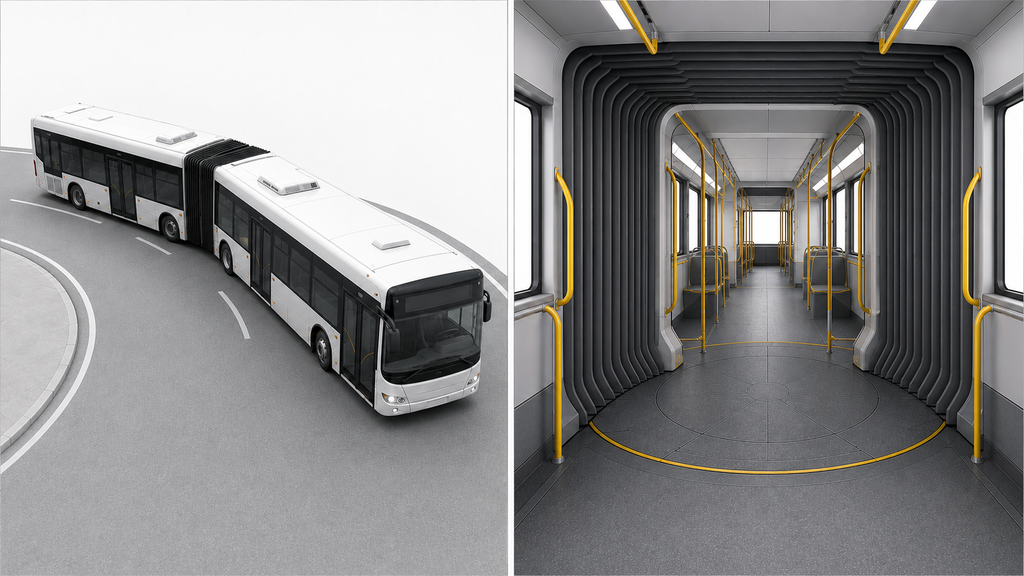
An articulated bus allows you to increase the passenger capacity of urban transport without turning the cabin into two isolated spaces. For the passenger, the connection of sections is perceived as a continuation of the cabin, but technically it is one of the most mobile areas of the car. When passing corners, the front and rear of the bus change position relative to each other, and the passage between them must remain safe and protected.
What should a bellows do on a bus?
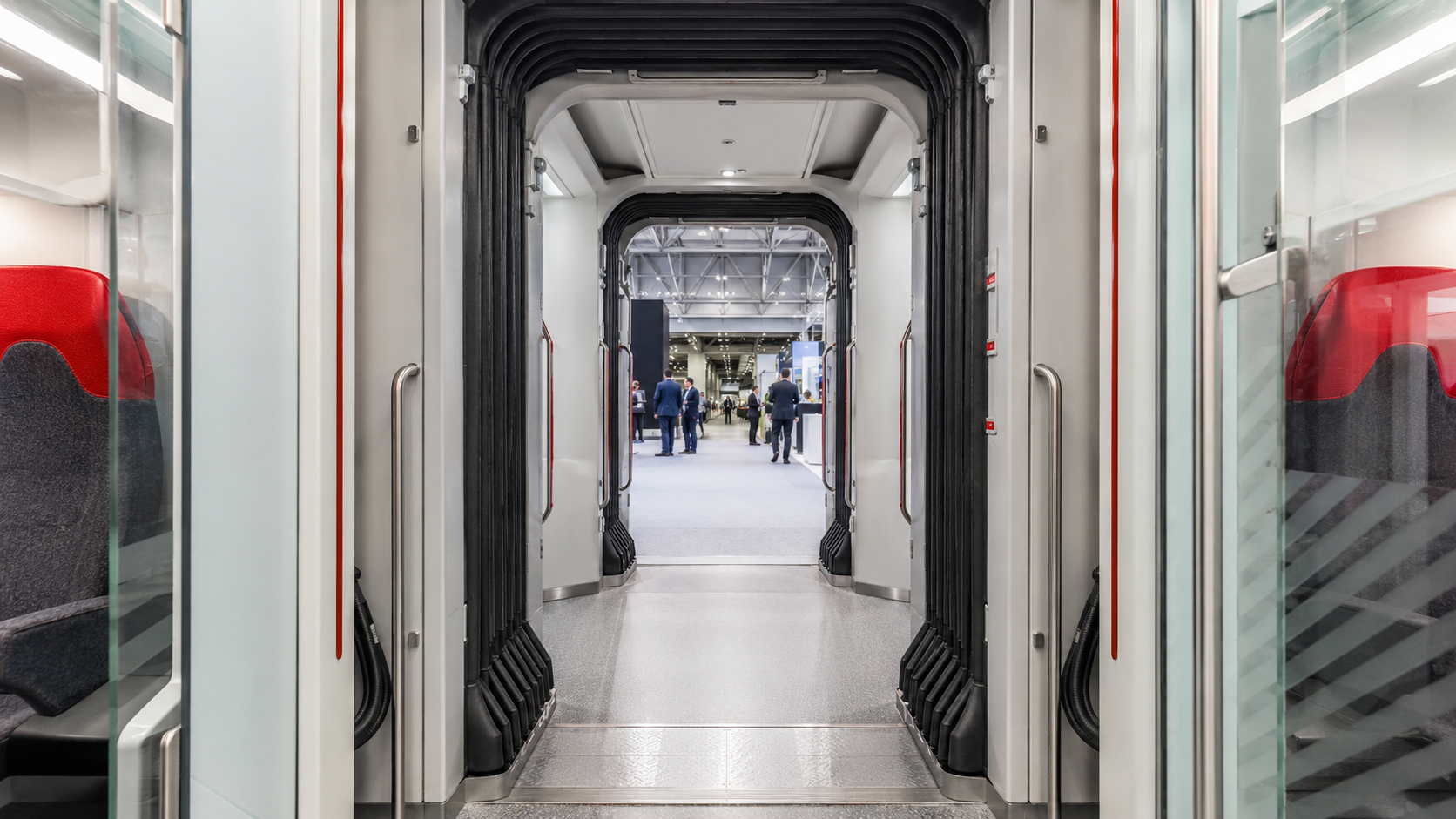
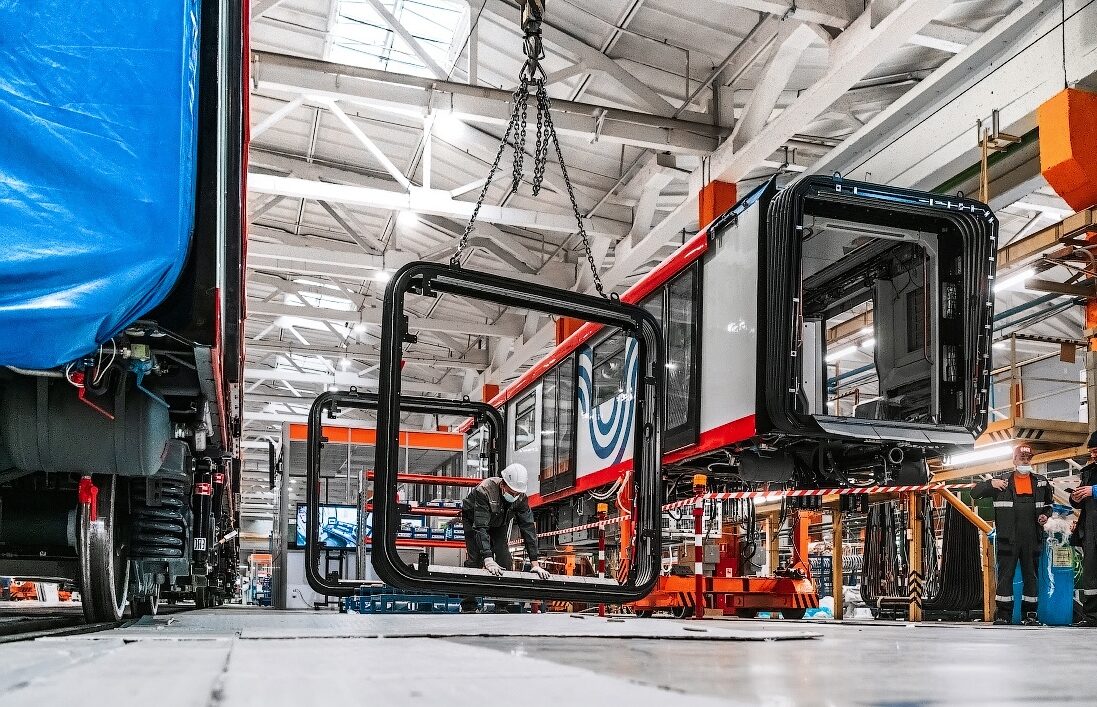
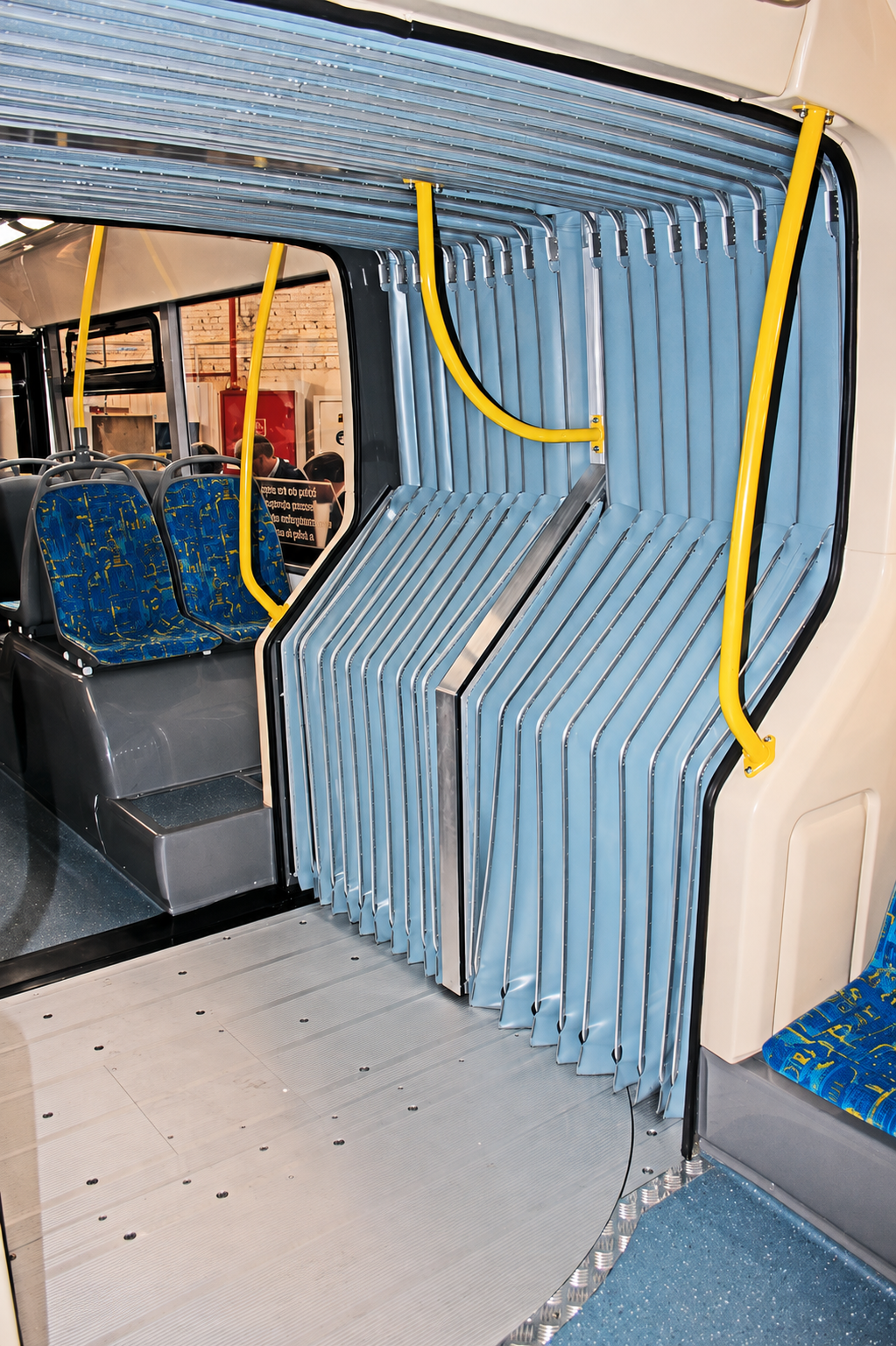
The principle of operation is in many ways close to the tram solution: The wave bellows provide relative movement of body parts, form a passenger passage and protect the interior space from environmental influences. In addition, it participates in the noise and thermal insulation of the joint zone.
In this case, the requirements of the bus and tram can not be automatically considered the same. The geometry of the vehicle, the design of the articulation and the driving modes are different. Therefore, the presence of a confirmed performance is precisely for the LiAZ - 6213 It is important as an example of specific applicability, and not just the theoretical possibility of using bellows in wheeled transport.
The articulated — bus is a system, not a single harmonica.
In the wider project materials for the bus direction are mentioned articulation systems, wiring systems and bellows. Their overall mission of — is to provide interconnection, power transmission, passenger passage and safe operation of public transport.
From a specific model to a new project
Bellows are developed taking into account the geometry of the articulation, dimensions and operating conditions of the vehicle. Therefore, the accumulated experience with a specific model does not mean that it is enough to use the same product for the next bus. Rather, it gives the manufacturer an engineering basis for analyzing a new task and creating an appropriate execution.
For a B2B customer, this is especially important when designing a new articulated bus or electric bus: The starting point is not the choice of a standard "harmonic", but the parameters of the body and the entire articulation system. After the analysis, the solution can go through the stages of adaptation, production, control and further service support.