Subway and suburban rail transport share one important feature: The passenger interacts with the rolling stock not only inside the cabin, but also in the areas of entry, transition between cars and next to the intercar space. Therefore, individual components here should not be considered in isolation, but as part of a common system responsible for the safe movement of passengers, the protection of potentially dangerous areas and the preservation of the vehicle's performance.
In the materials of the company Hübner for this direction, inter-wagon transitions, protective walls, protective elements are presented. In the wider range of railway transport there are also additional protective solutions, profile elements, finishing elements, means of passenger access.
The inter-car junction forms a protected route between wagons
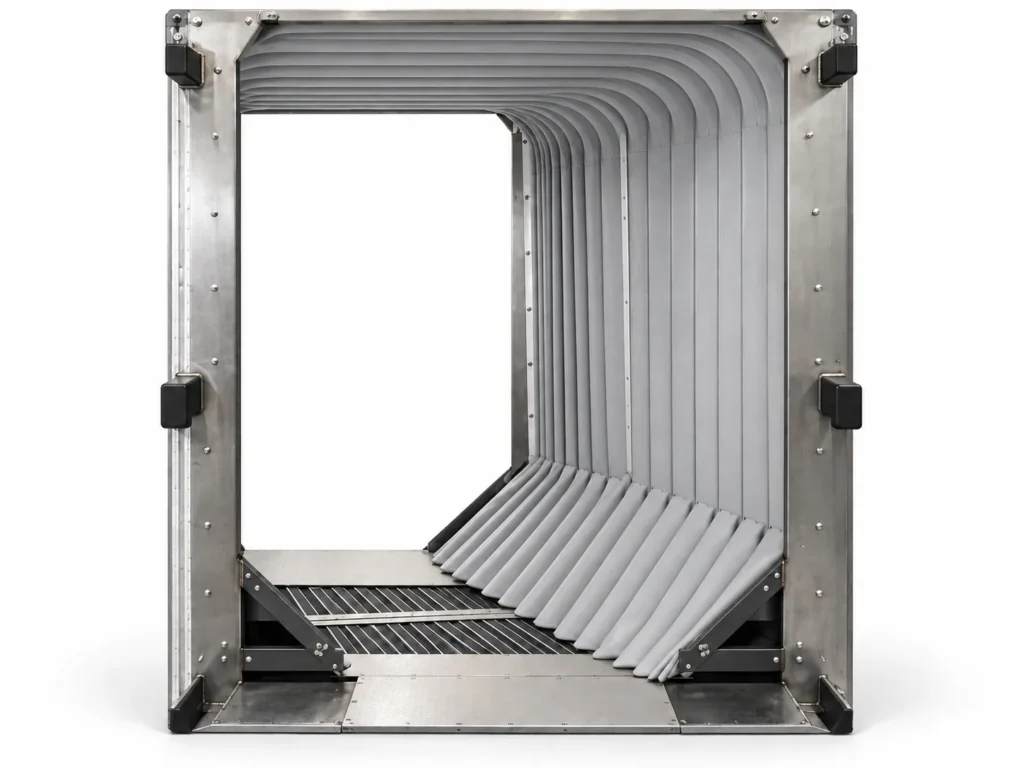
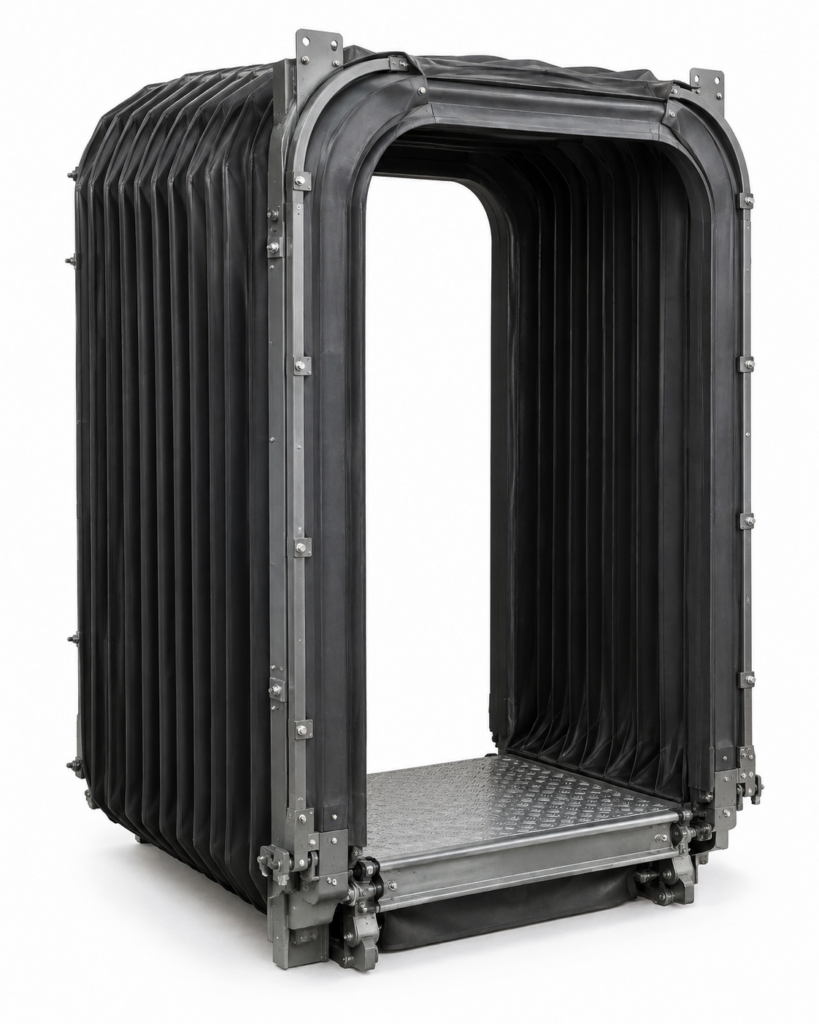
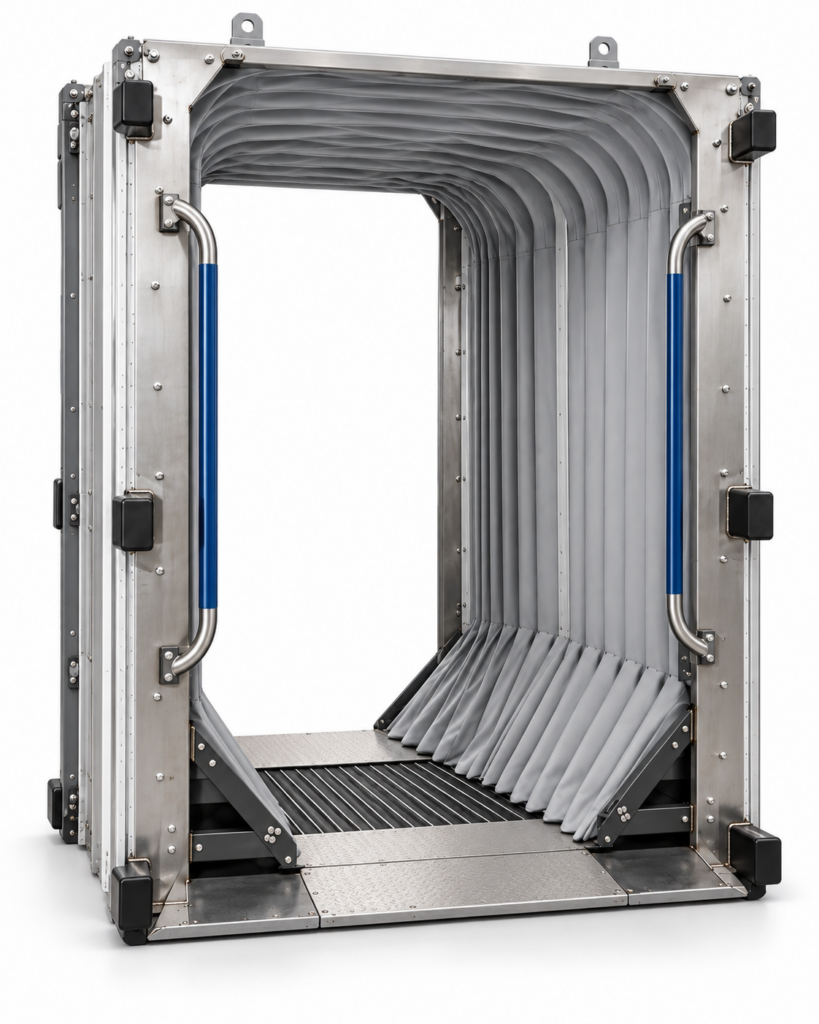
The inter-wagon crossing is part of the composition that allows the relative movement of the end parts of neighboring wagons and ensures the transition of passengers from one wagon to another. At the same time, the design performs the functions of noise and thermal insulation and protects passengers and service personnel from the effects of precipitation, dust and wind.
For the metro, this task is implemented, in particular, in a separate version for the Moscow metro trains "Moscow-2020" and "Moscow-2024". The materials indicate the article 04143625200; the product is certified and entered in the Register of Russian industrial products.
For the suburban direction there are other performances. For example, the inter-wagon transition with handrails 04126370900 is used for electric trains EG2TV and EGE2TV "Ivolga", and separate halves of inter-wagon transitions are used in the compositions EP2D, EP2DM and ED4M.
The protective wall closes the potentially dangerous intercar space
Outside the train there is another task: The space between adjacent wagons must be protected from access by people and foreign objects.
For this purpose, protective walls are used. In the materials of the company Hübner, they are described as inter-wagon protective fences installed between the wagons and preventing unauthorized persons from entering the inter-wagon space and on the roof of the train.
Separate material on passenger safety directly connects the protective walls with the metro and suburban transport. Their purpose is formulated as the prevention of accidental fall or deliberate penetration of a person, as well as the ingress of foreign objects into the intercar space — both during the parking of the train at the station and when it moves along the platform.
In the product materials there are two versions of the protective wall for electric trains EG2Tv and EGE2Tv "Ivolga": without adapter frame and with adapter frame. Both products have separate register numbers of Russian industrial products.
Rolling stock areas and applicable solutions
| Zone / task | What needs to be ensured | The Applicable Components |
|---|---|---|
| Transition between wagons | Safe movement of passengers and compensation of reciprocal movement of wagons | Inter-car junctions (disambiguation) |
| Intercar space outside | Restriction of people's access and protection against ingress of foreign objects | The protective walls |
| the Passenger Passage | Protection against precipitation, dust, wind, heat and noise insulation | Inter-wagon transitions, protective elements |
| Door and Paired Zones | Additional protection of the passenger from pinching | Elements of protection |
| Elements of the body and interior | Integration of additional components into railway rolling stock | Protective solutions, profile elements, finishing elements |
| Entry and exit of passengers | Passenger Access Solutions | Passenger access facilities |
Protective elements in the initial presentation are separately shown as elements to protect passengers from being pinched by vehicle doors.
From one — product to a complex organization of the intercar zone
Inside the train, the passenger moves through the inter-car junction. Outside, access to the gap between wagons is limited to protective structures. In some pairings, protective elements are used. In the vehicle itself, protective solutions, profile elements and finishing components can be used.
Different models of rolling stock require different executions
Even within the same direction, it is impossible to use a single crossing for any train.
For example, half of the intercar crossing for metro trains "Moscow-2020" and "Moscow-2024" has a separate design and applicability. For the Oriole, another — product is used, an inter-wagon transition with handrails. For EP2D, EP2DM and ED4M, own executions of the halves of the transitions are provided.
This is a good argument for the B2B audience: The company does not work with an impersonal category "transition for the train", but with products related to a specific design of the rolling stock.
With a new project, this logic continues through engineering development and adaptation: the vehicle type, design, technical requirements, drawings, sketches, dimensions and operating conditions are studied, after which the existing solution is selected or the necessary adaptation is worked out.
Reliability of the solution continues after delivery
For subway and suburban transport components, not only the initial design is important, but also the ability to accompany the product in operation.
In the service materials, Hübner company indicates the performance of repair and service work on inter-wagon transitions and other components in the warranty and post-warranty period. Among the features of the service are the availability of spare parts, prompt response to requests, customer support throughout the product life cycle and its own design service.