
The Hübner Company helps to select, adapt and accompany engineering solutions for transport engineering, taking into account the requirements of a particular project.
The work begins with the analysis of the technical task. The company's specialists help to determine the optimal solution, taking into account the type of vehicle, design, operating conditions and project requirements.
The company's specialists help to determine the optimal approach to solving a technical problem, taking into account the type of vehicle, its design features and operating conditions. The consultation may include a preliminary assessment of the initial data, a discussion of the project requirements and recommendations for further engineering development.
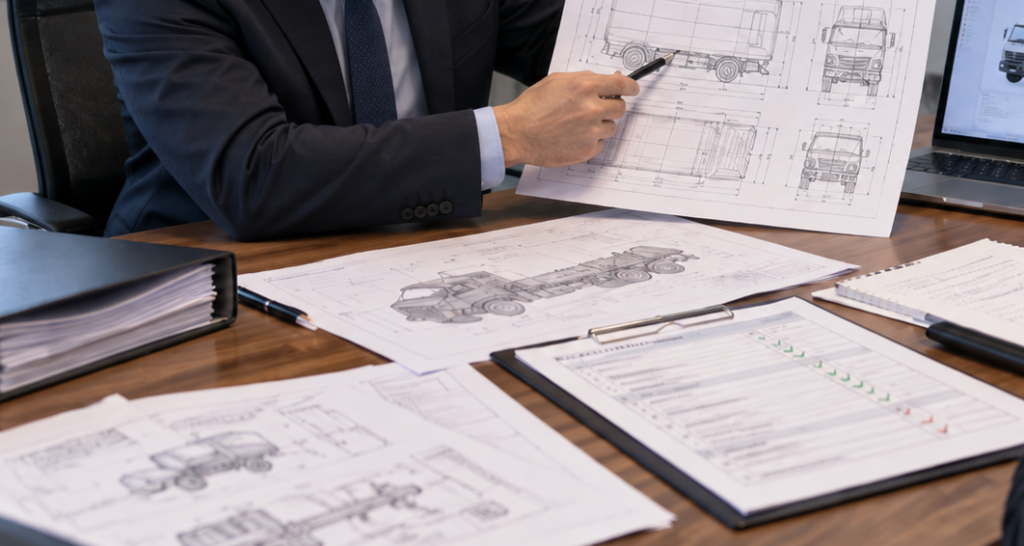
Before starting work, specialists analyze the drawings provided by the customer, technical requirements, operating conditions and features of the vehicle. This allows you to identify the key limitations of the project, identify potential risks and generate initial data for subsequent adaptation or development of the product.
The existing solution can be adapted to the specific design of the rolling stock and customer requirements. As part of the study, the geometry of the product, the materials used, the climatic performance and the features of the operation of a particular vehicle are taken into account.
If necessary, specialists perform a deeper study of the solution: calculations, selection of analogues or development of a new node, as well as preparation of technical documentation and prototypes. This approach is used in cases where the standard performance cannot be directly integrated into the vehicle design.
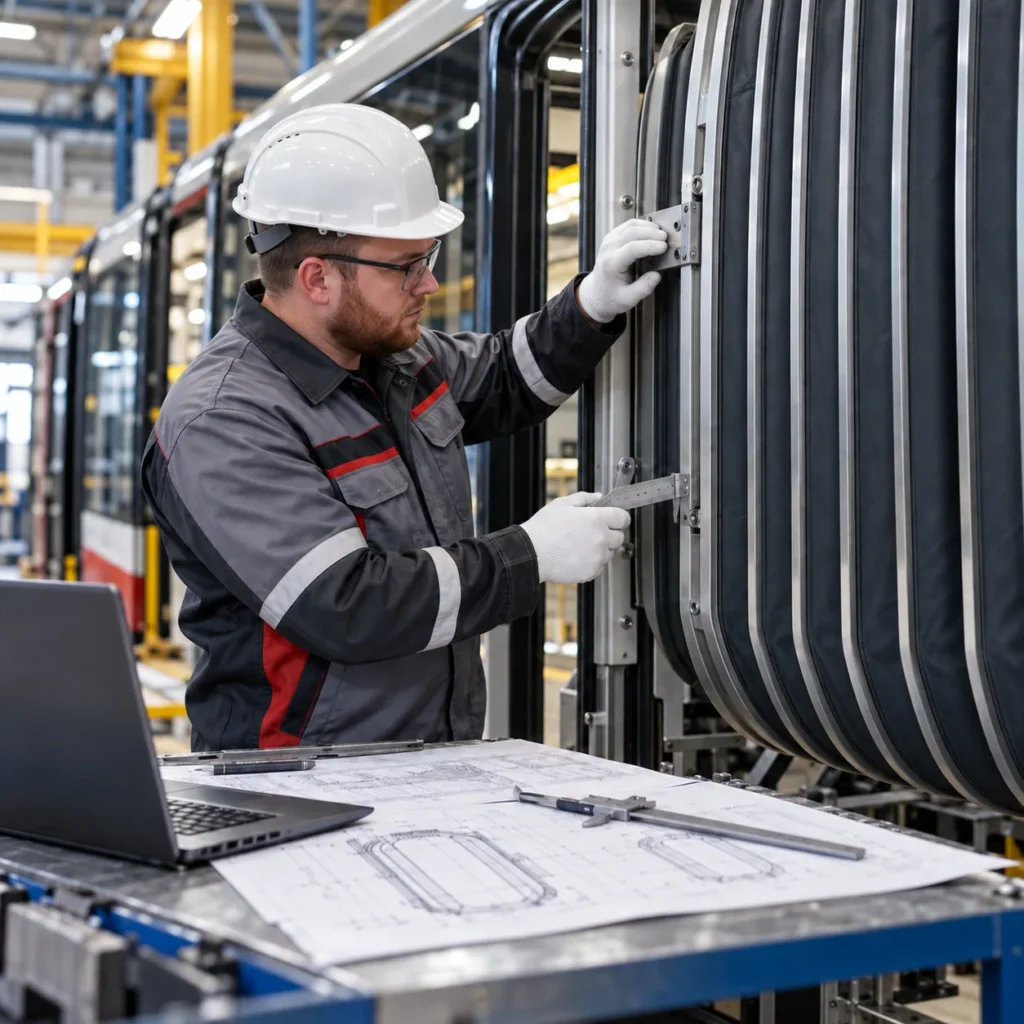
During the manufacturing process, the products are checked for compliance with the technical specifications and requirements of the project. Control includes inspection of materials and finished products, bench tests and acceptance of OTC; if necessary, the effects of cyclic loads, climatic factors and the tightness of the structure are evaluated.
If necessary, specialists accompany the installation of products directly on the customer's site. Such support allows you to control the correctness of the installation of the product, promptly advise technical specialists of the customer and take into account the features of a particular vehicle when putting products into operation.
Warranty appeals are considered taking into account the nature of the malfunction and the operating conditions of the product. If necessary, specialists carry out technical analysis of products to determine the causes of the defect and form recommendations for further action.
The company performs repair and maintenance work to maintain and restore the operability of intercar junctions, bellows and other components. The works are carried out both in the warranty and post-warranty period and are aimed at extending the life of the product and restoring its performance characteristics.
For products in operation, the supply of spare parts, wear-out elements and repair kits is provided. The presence of the necessary components allows you to perform maintenance and repairs faster, reducing the downtime of equipment or vehicle.
When developing, drawings, sketches, technical requirements, dimensions, installation restrictions and features of the operation of a particular vehicle are taken into account.
Work on the project begins with the collection of initial technical information. The customer transmits the available data on the vehicle and the requirements for the future product: technical specification, drawings and diagrams, layout dimensions, information about the installation site, operating conditions and expected loads. If available, photographs, sketches, 3D materials and examples of existing structures are also used.
At this stage, Hübner's specialists analyze the completeness of the data provided and determine whether they are enough to begin engineering work. Particular attention is paid to geometric restrictions, the interface of the product with the design of the vehicle, the requirements for installation and further operation. Such a preliminary analysis allows us to identify key technical limitations even before the development begins and form an understandable basis for further work. In the official process of the company, the first stage also involves obtaining a description of the vehicle, drawings and technical requirements.
Understanding what inputs are in place, what parameters will be decisive for the project and what additional information may be lacking for further development.
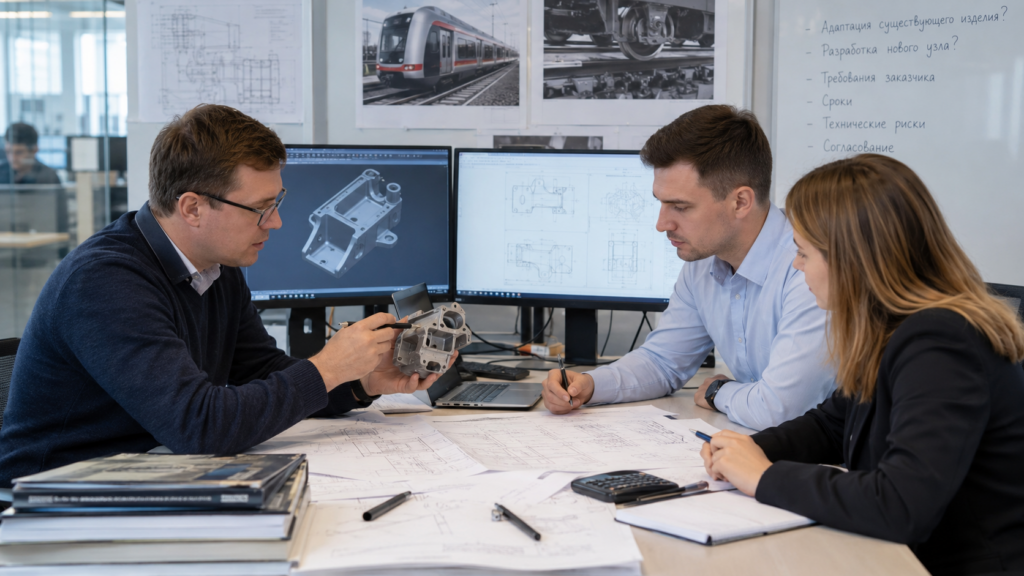
After analyzing the initial data, engineering work on the future product begins. Experts consider possible design options, assess the applicability of existing solutions and determine whether the adaptation of a serial product or the development of a new node is required. At this stage, the necessary calculations are performed, the geometry, conjugations and the principle of design work are analyzed, suitable technical solutions and materials are selected.
The task of the — stage is not just to pick up the product from the catalog, but to determine the design that will be able to work correctly as part of a particular vehicle. The available mounting space, mutual movement of rolling stock parts, operational effects and requirements of the technical specification are taken into account. In the materials of the company, engineering work directly includes calculations, the selection of analogues or the development of a new node, after which the solution proceeds to the stage of coordination with the customer.
If the existing design does not meet the initial conditions of the project, the amount of changes that must be made before manufacture is determined.
A pre-formed technical concept of the future product and an understanding of whether the existing solution, its modification or a new design will be used.
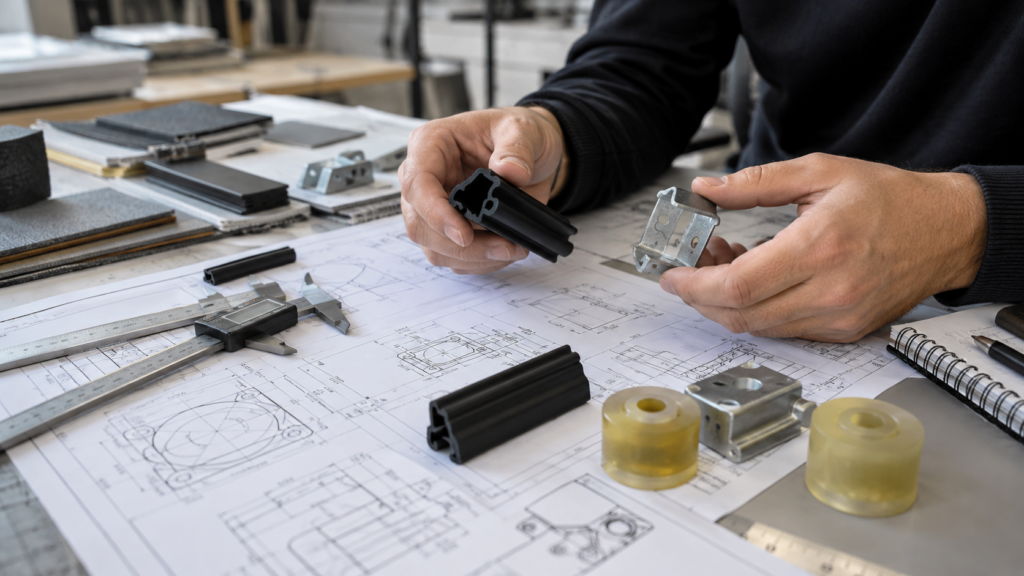
After selecting the principal design, the solution is adapted to a specific project. At this stage, the geometric parameters, coupling and fastening points, material characteristics and other elements on which the compatibility of the product with the vehicle depends are specified. The design is not worked out in isolation, but as part of a common assembly of rolling stock.
When adapting, the real size of the installation zone, installation restrictions, design features of neighboring elements and conditions for further operation are taken into account. If necessary, individual structural elements, the configuration of frames, joints, fasteners or other components are adjusted. The purpose of this — work is to ensure the correct integration of the product without violating the requirements of the project and to maintain the necessary functional characteristics.
The company has its own engineering competencies and production capabilities and emphasizes the ability to create and implement its own solutions for the transport industry. After technical development, the project is agreed with the customer, including work with documentation and, if necessary, prototypes.
A design tied to the parameters of a particular vehicle and prepared for approval and subsequent manufacture.
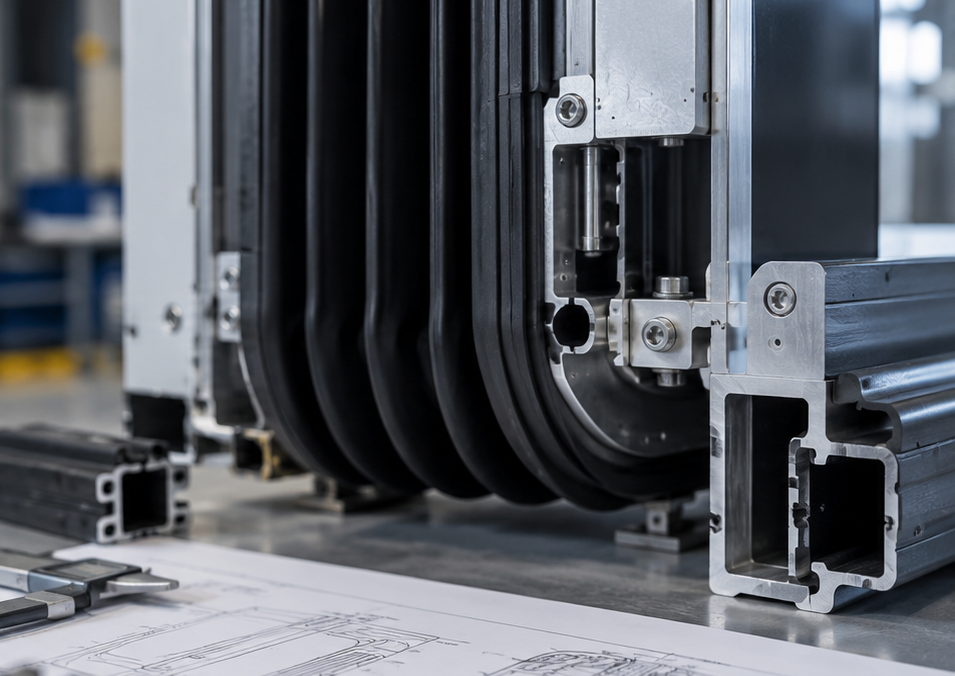
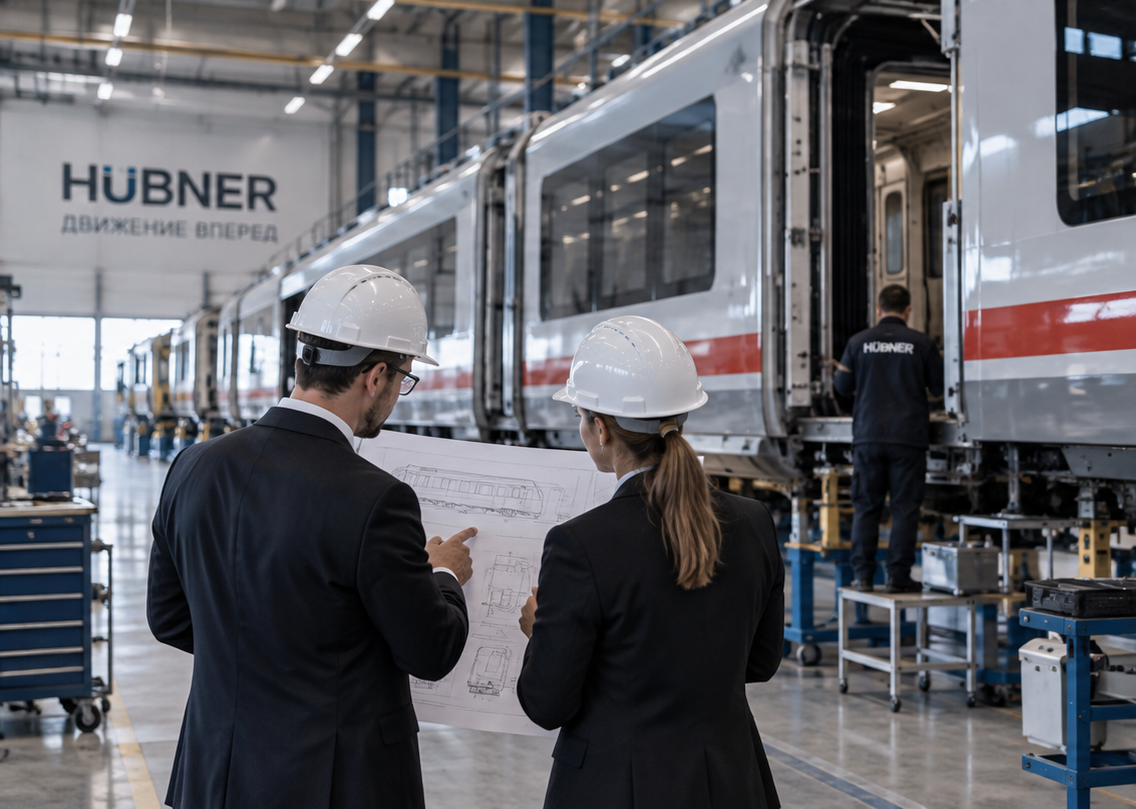
After completion of engineering work and approval of the technical solution, the project is transferred to production. Production is carried out in accordance with the approved design and technical documentation. At this stage, the engineering solution turns into a finished product, so it is especially important to keep the parameters, geometry and quality requirements laid down in the project.
Hübner has its own production base and develops the manufacture of components at its own facilities. The company's materials separately indicate production sites for welding, processing aluminum profiles and stainless steel products, as well as cooperation with Russian suppliers of materials, semi-finished products and components.
Production is part of a single process: After engineering and approval, the product is manufactured, and then it goes to the stage of testing and acceptance control. In the corporate description of the process, this stage combines production, bench testing and acceptance of OTC.
A product manufactured according to the agreed documentation and prepared for verification of compliance with the requirements of the project.
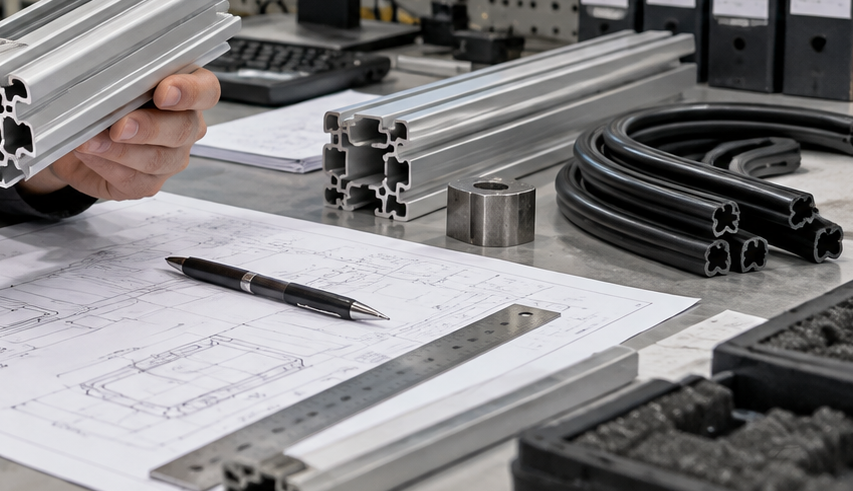
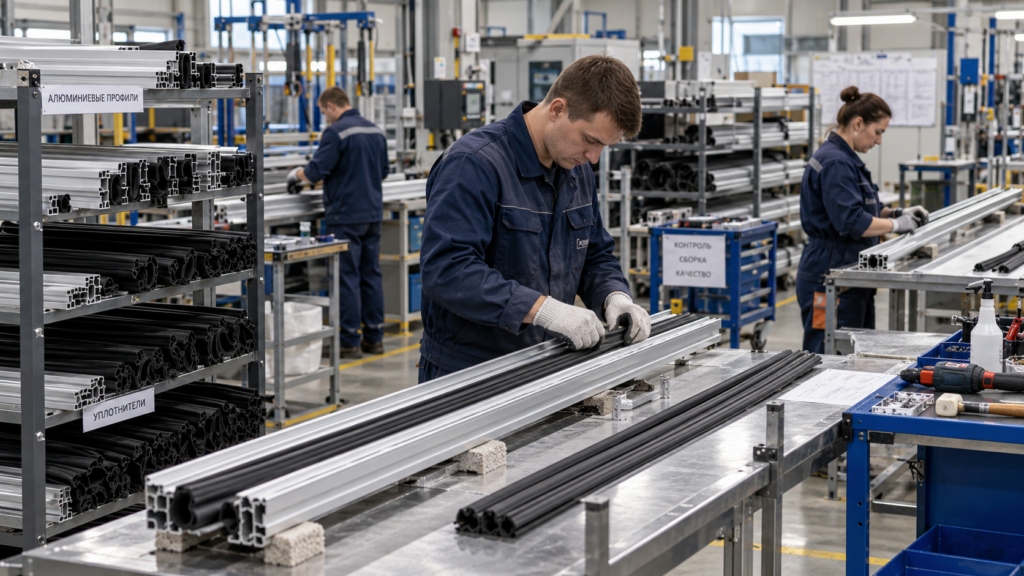
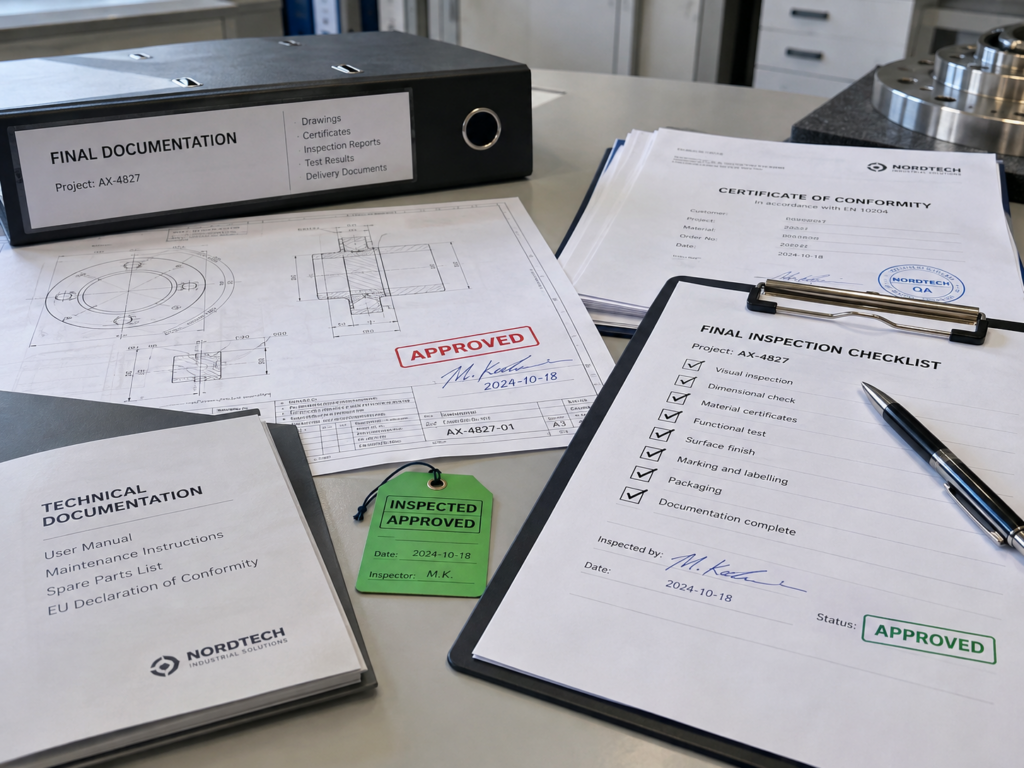
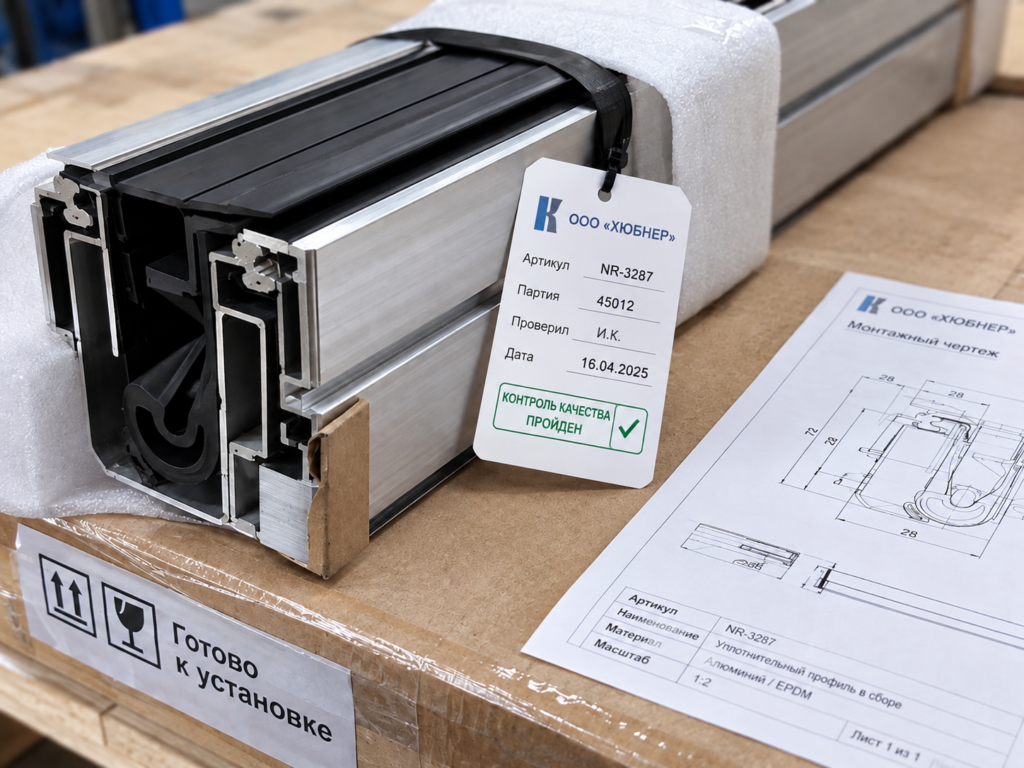
Quality control accompanies the manufacture of products and is not limited to checking the finished product. At Hübner's own production site, control is carried out at different stages of — from the inspection of incoming materials to the acceptance of finished products before delivery to the customer. This approach allows to identify possible deviations in the manufacturing process, and not only after its completion.
Finished products undergo the necessary inspections and tests in accordance with the technical requirements of a particular project. In the materials of the company, among the types of control used are tests for climatic effects, cyclic loads, leakproofness check, input control of materials and acceptance control of finished products.
The final task of the — stage is to confirm that the manufactured structure meets the agreed requirements and is ready for further delivery and operation. After production and control, the corporate process provides for shipment, acceptance from the customer and subsequent service support.
Verified finished product that has passed the project stages of production and acceptance control before delivery.
When developing, drawings, sketches, technical requirements, dimensions, installation restrictions and features of the operation of a particular vehicle are taken into account.

Materials, semi-finished products and components pass the entrance control before starting production. Their compliance with the established requirements and project documentation is checked. This approach allows you to identify possible inconsistencies even before the start of production of the product and reduce risks at subsequent stages of the production process.
Control is carried out not only after the completion of production. At different stages of production, specialists check the conformity of products with design and technical documentation, monitor the parameters of the product and record possible deviations. This allows you to adjust the production process in a timely manner and ensure the stability of the characteristics of the finished product.
Finished products undergo the necessary tests in accordance with the technical requirements of a particular project. Depending on the type of product, climatic effects, cyclic loads and tightness of the structure can be checked. Tests allow you to assess the performance of the product before delivery to the customer and confirm compliance with the established requirements.
Before shipment, the finished products undergo acceptance control. The conformity of the product to the requirements of the project, completeness and readiness for transfer to the customer are checked. Only after the completion of the provided control procedures, the products proceed to the stage of delivery and subsequent service support.
To get advice or discuss a potential project, contact us directly. For a productive conversation, please prepare a description of the vehicle, technical requirements, drawings (if available) and your contact details. We will reply as soon as possible.