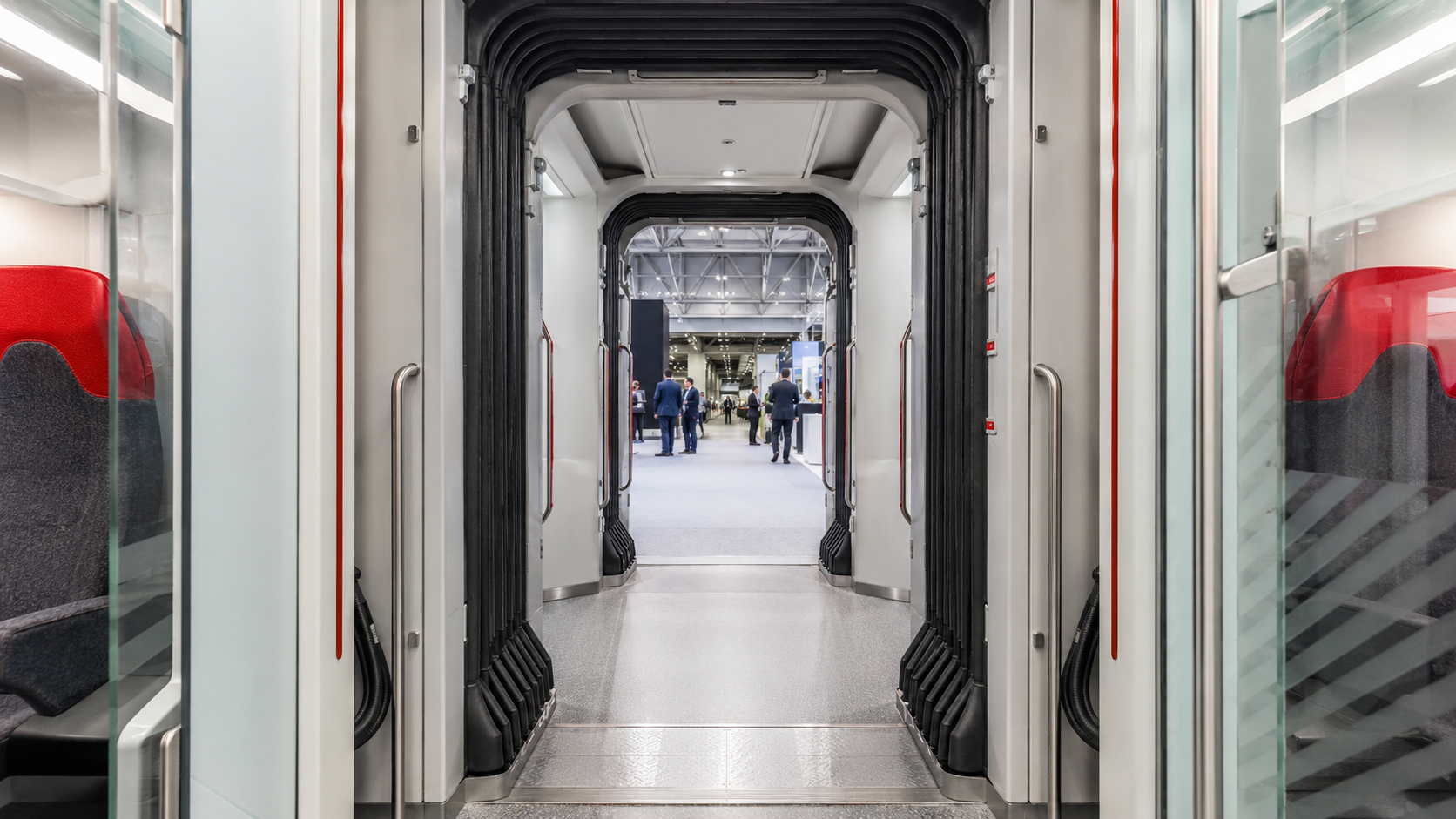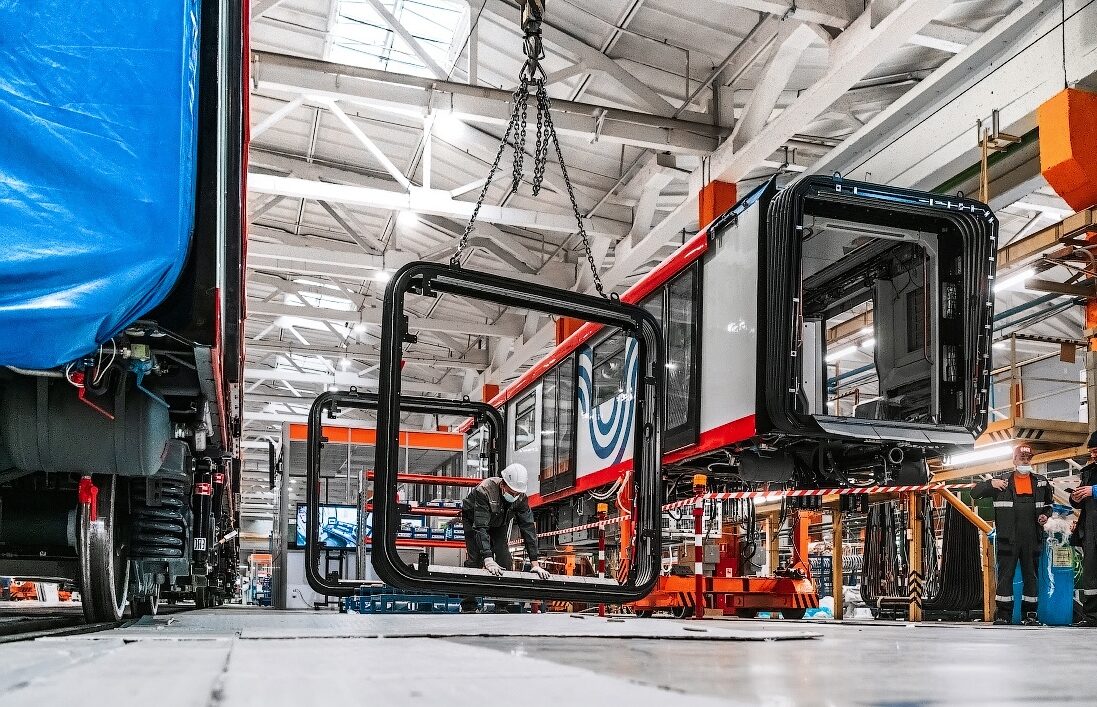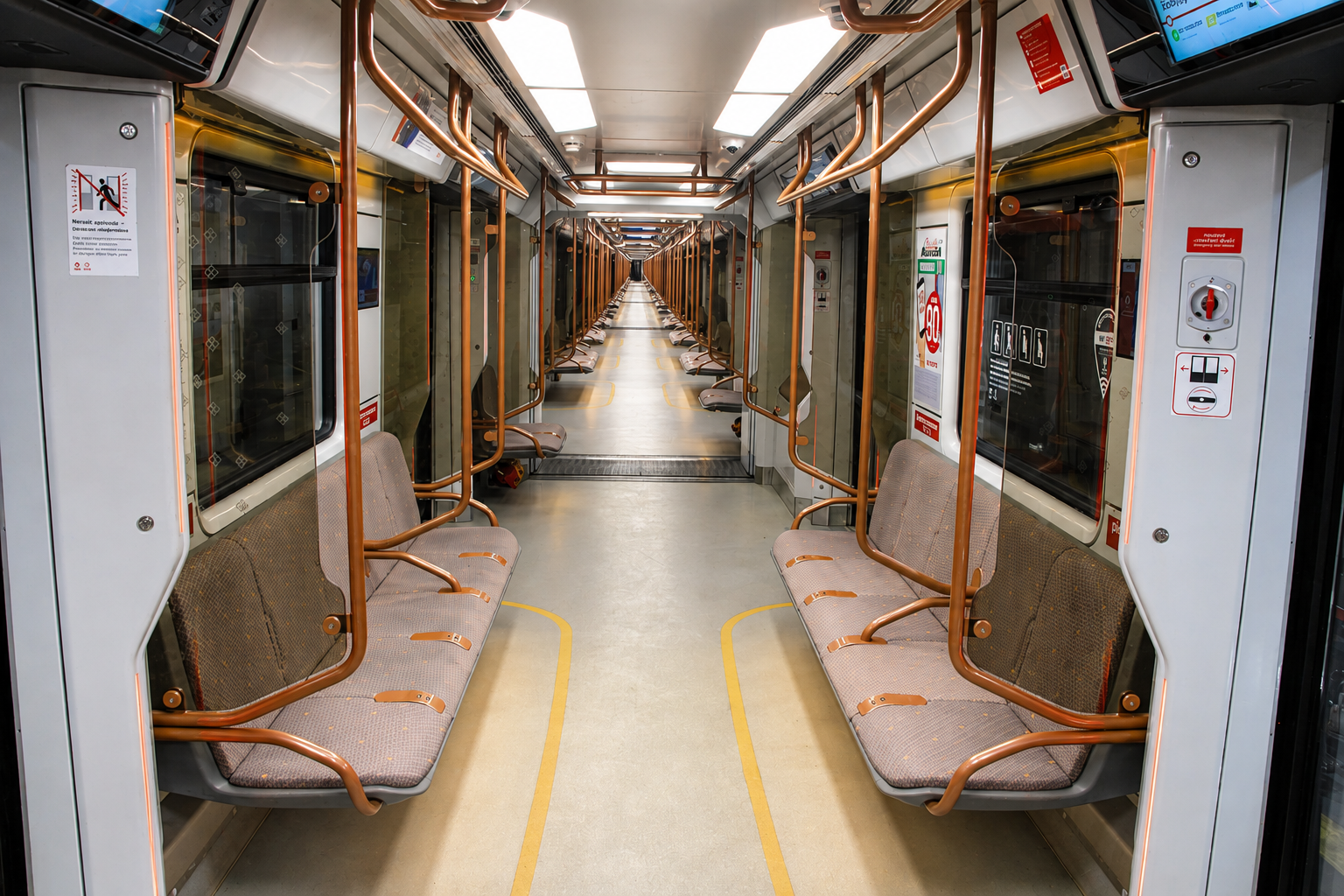
In the metro, the intercar space works in special conditions: intensive operation, a large number of passengers, regular cyclical movements of the train and increased safety requirements make the connection of neighboring cars a full-fledged engineering system.
In the product materials, the company Hübner confirmed the use of halves of intercar crossings for trains the Moscow Metro "Moscow-2020" and "Moscow-2024". The product has dimensions of 500 × 2390 × 2557 mm and is included in the Register of Russian Industrial Products under the number 10638733.
Why the transition for the subway — is a separate engineering task
When moving, the wagons do not remain rigidly fixed relative to each other. The transition should compensate for the arising movements and at the same time form a protected passenger passage. For Hübner products, among the main functions are noise and thermal insulation, tightness of the passage zone, protection from external influences and compensation for mutual movement of bodies.
At the same time, the metro cannot be considered simply as another type of railway transport. In the terms of reference of the new site, this direction is specially allocated separately: The subway needs to focus on passenger safety, protection of intercar space, reliability, ease of operation and serviceability.
Therefore, the architecture of the solution itself is important. The transition design should be integrated into a specific body, take into account its geometry and range of movement, as well as preserve the specified properties in conditions of regular urban operation. The execution is developed taking into account the parameters of the rolling stock and the technical requirements of the project, and the working cycle includes analysis, development, coordination, production, testing and service.
Production and further support
For the metro, not only the supply of new components is especially important, but also the ability to work with the product throughout its operation. In the general model, Hübner's production cycle is associated with the subsequent service: the company considers technical appeals, performs the necessary engineering work and provides warranty and post-warranty support.
This allows us to consider the inter-wagon transition not as a one-time delivery, but as part of the rolling stock life cycle. When upgrading, repairing or replacing individual elements, the manufacturer already has technical and production competence for the corresponding system.
From serial production to the next generation of trains
The practice of working with several generations of rolling stock is also important because transport continues to develop. Changing the geometry of the cabin, the width of the passage or the requirements for the passenger environment inevitably affects the design of the intercar connection. Therefore, the accumulated competence is valuable not only for the re-release of an existing product, but also as a starting point for new projects.
For Hübner, the metro remains one of the confirmed areas of application of products along with electric trains, passenger cars and rail buses.
—